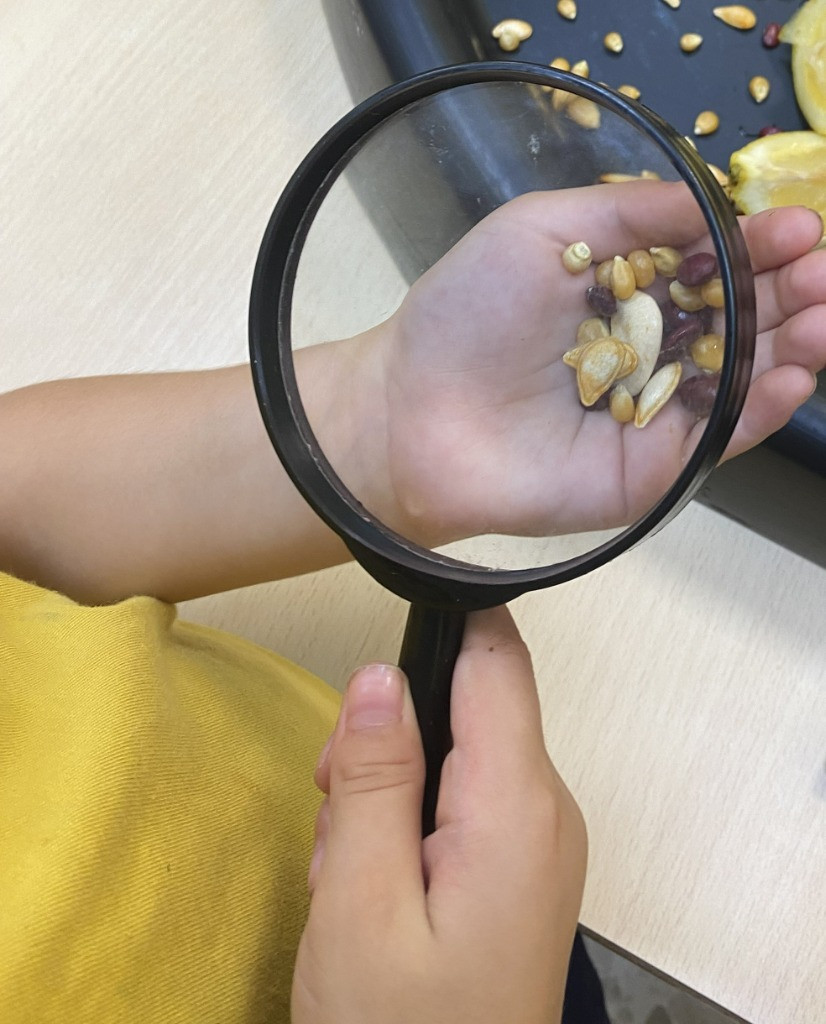
Nature Detectives 1
1. Find a Nature Spot
Choose a small outdoor space for observation. It doesn’t need to be large, even wild plants growing from walls will do. You can also expand on your Soil Magic Space.
2. Collect Seeds
Prepare small boxes with different seeds collected over summer or autumn. Include a variety of shapes, sizes, and textures.
Seed Collection Tip: Visit the Dinja Waħda YouTube Playlist: Seed Collection Videos.
3. Experiment with Loupes
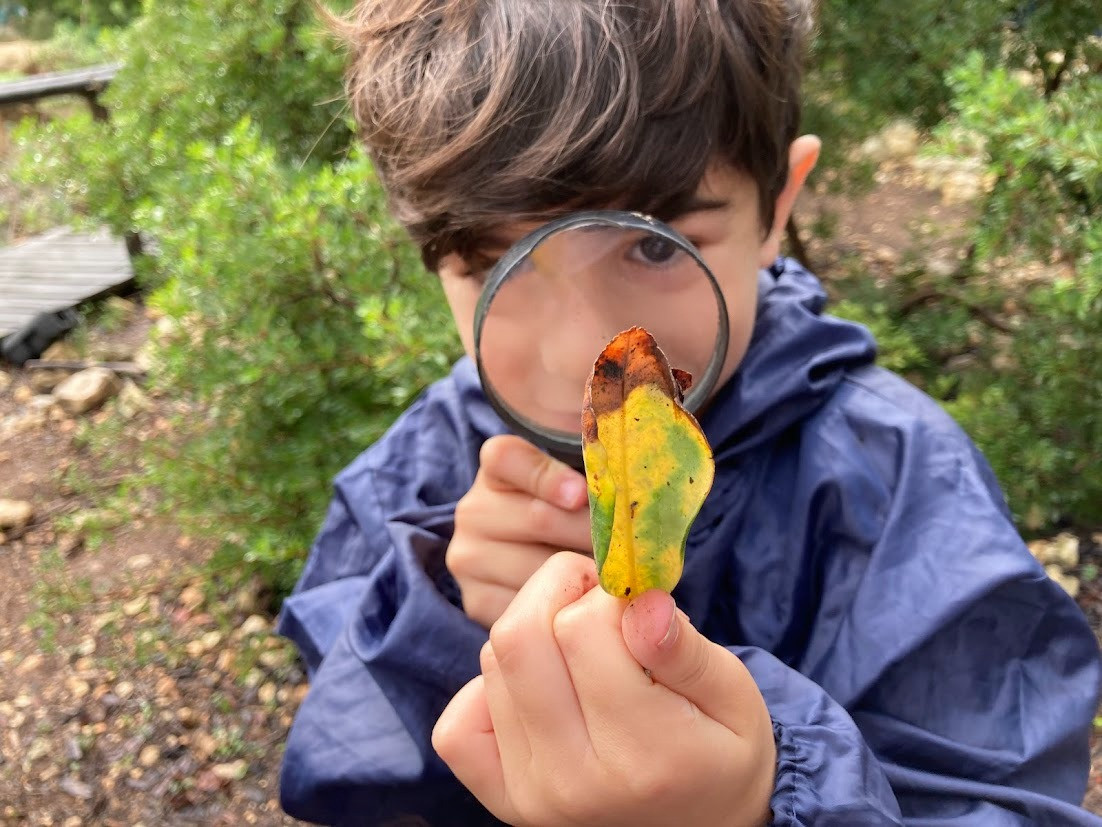
Place loupes (or magnifying lenses) on a table. Invite the children to try them out and explore how they work. Encourage them to look closely at their own skin, hair, or eyes. Listen for their sense of wonder as things appear magnified.
4. Observe Seeds Closely
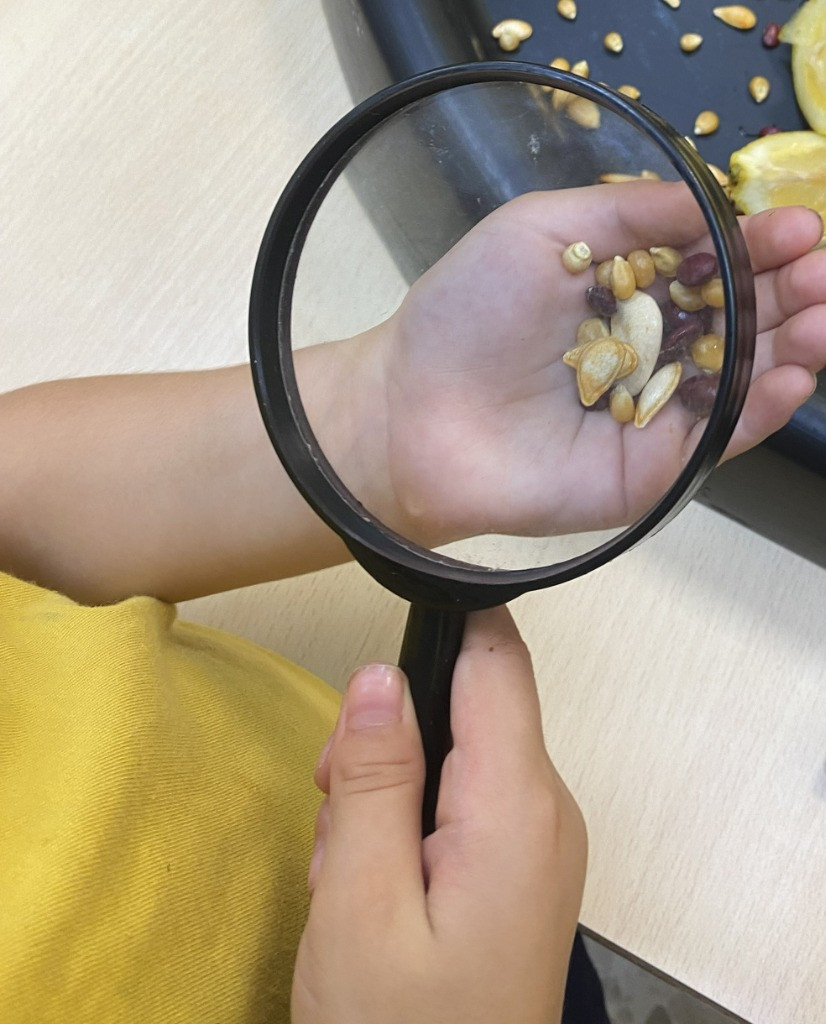
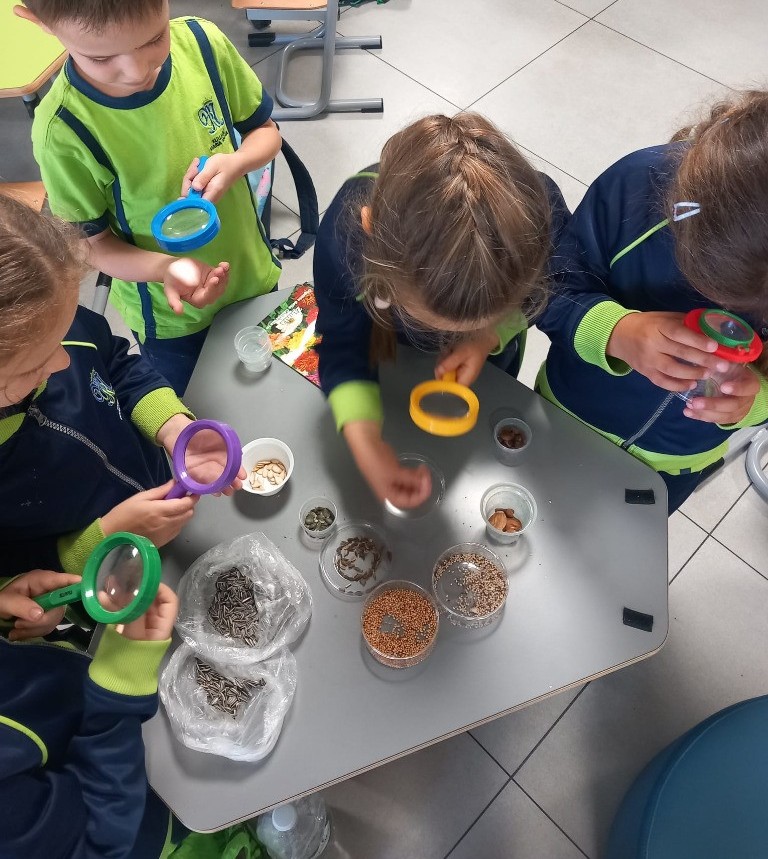
Give each child a loupe and lead the children to the seed boxes to have a close-up look at them. Let them examine the seeds and ask questions such as:
“What does it look like?”, “How does it feel?”, “What does it remind you of?”
Write down the words and phrases the children use.
5. Create Sentences and Illustrations
Use the children’s observations to build sentences like:
“It feels like…”
“It reminds me of…” (For example: “The seed feels bumpy like a tiny pebble.”)
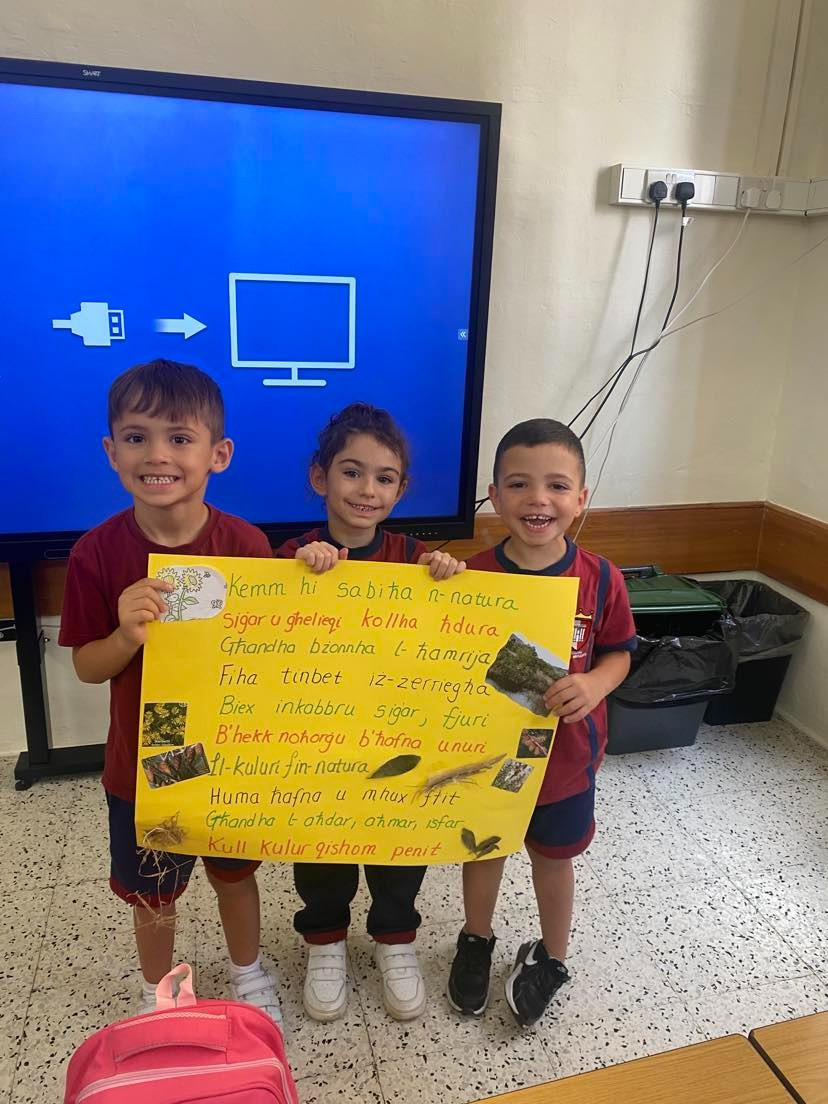
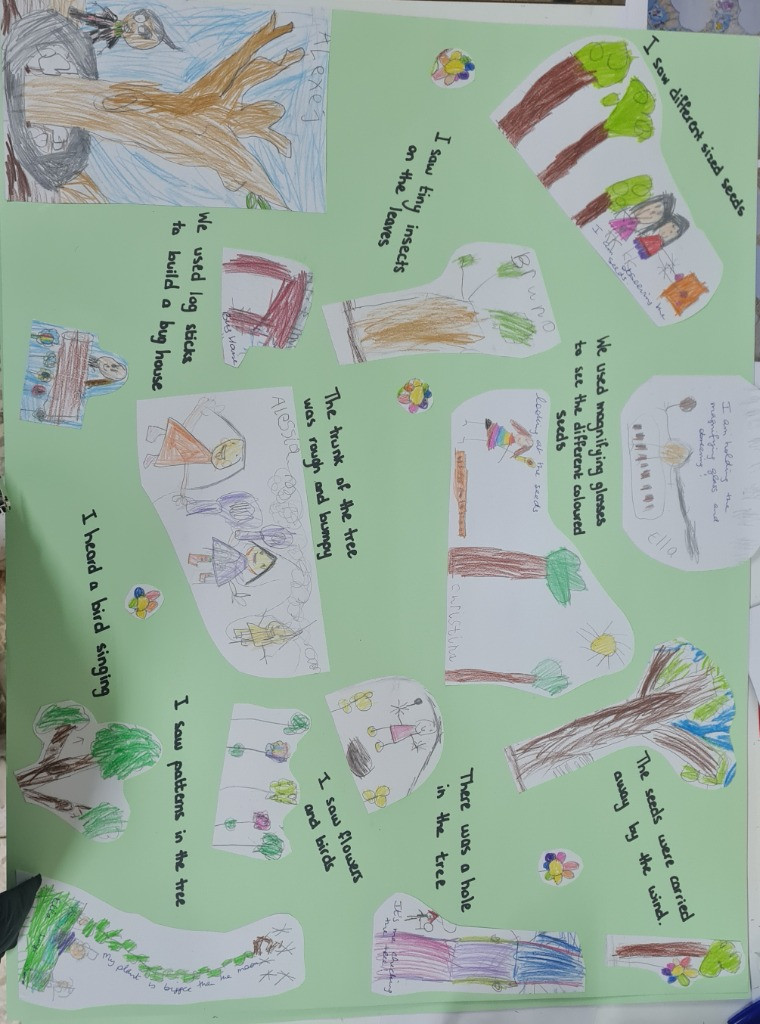
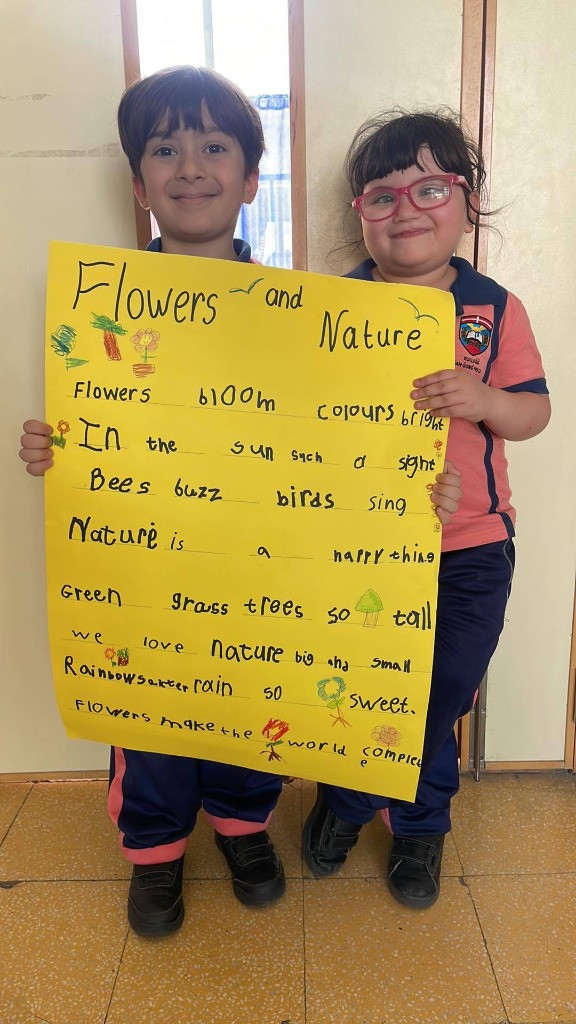
Write their sentences on a large chart. Invite the children to illustrate their ideas with drawings, magazine cutouts, or photos. Display the chart in class.
6. Explore Nature Again
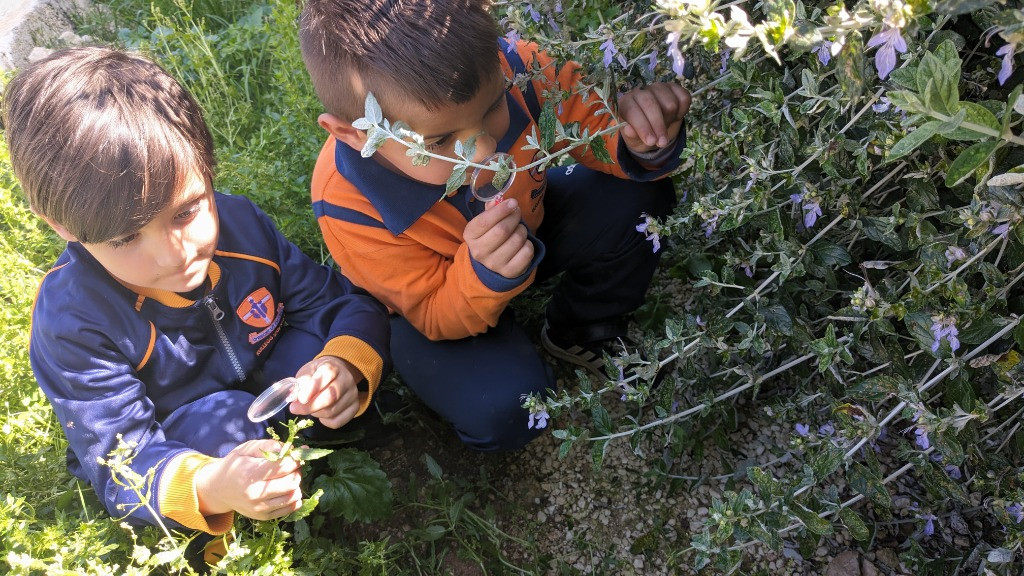
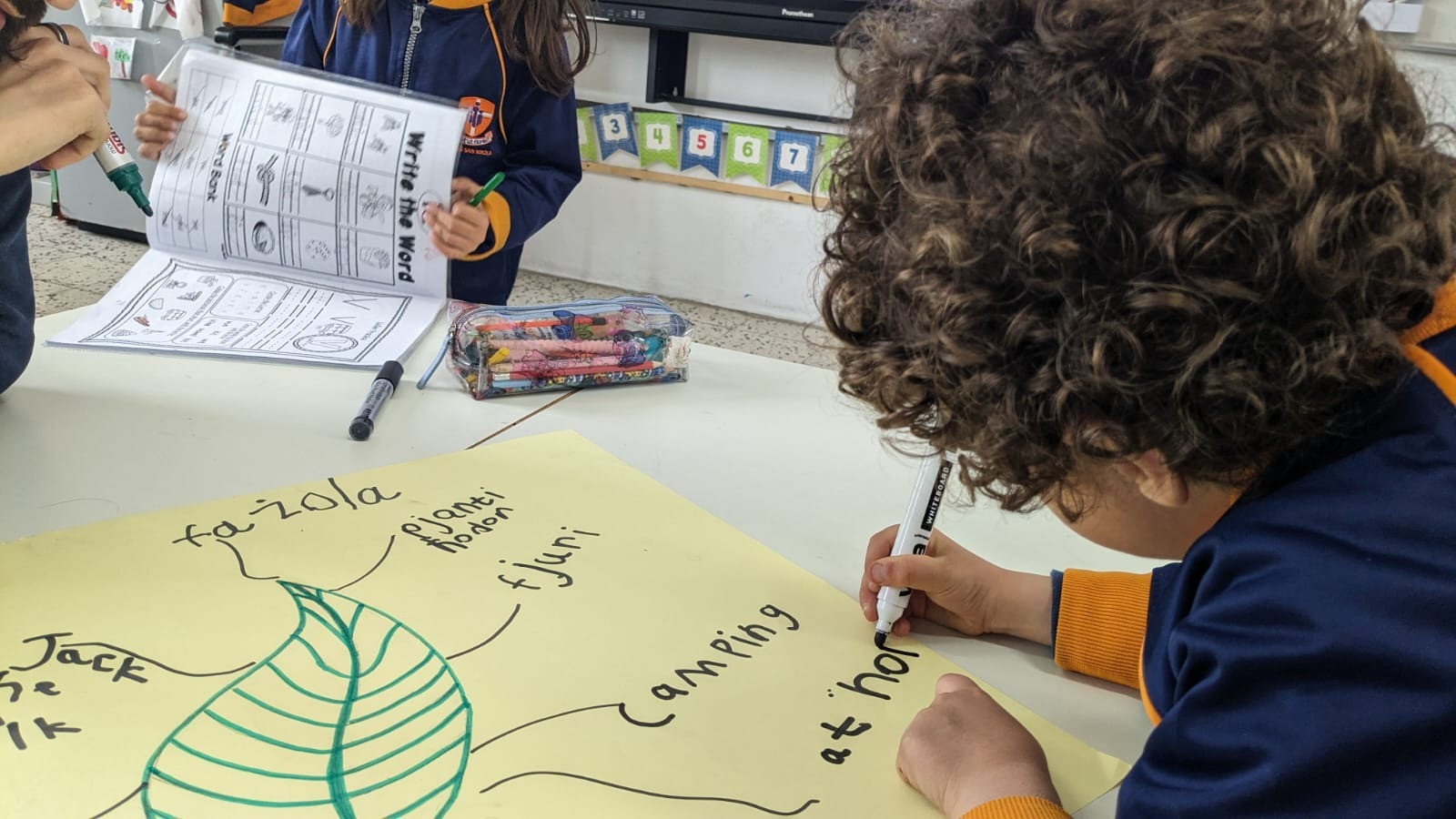
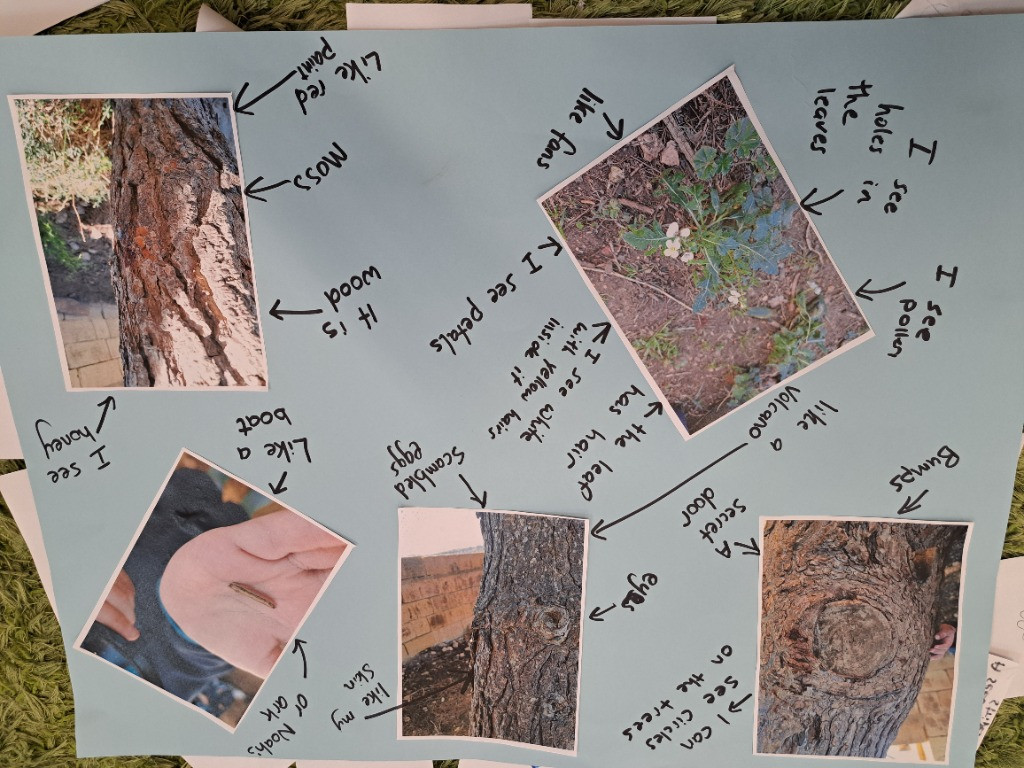
Return to the outdoor space with loupes to study leaves, soil, or other objects. Write down the children’s words, but this time create a visual poem. Write a key word (e.g. leaf or soil) in the centre of a card and surround it with the children’s drawings or words (e.g. feathers, wings, birds).
7. Share and Display
Display the children’s visual poems in the classroom. Read their sentences or poems aloud and encourage them to reflect on how looking closely at nature inspired their ideas.
Resources & Equipment Needed
- Loupes (may be available from BirdLife Malta – contact [email protected]);
- Small boxes (one per seed type);
- Pens/pencils;
- Notepad;
- Large card for chart/poem;
You can download these instructions in PDF by clicking here: Generate PDF
Downloadable Material
Activity Sheet_Nature detectives 1
PDF Document
Make sure to take photos of:
1. Children using loupes to explore seeds and nature2. The chart with the children’s sentences and drawings
3. The visual poem display
Activity Photos for Inspiration
Learning Outcomes & Curriculum Integration
Subjects
- - English, Maths, Science, Maltese
Learning Outcomes
Nature Detectives 1 Learning Opportunities
Subject: English
Strategies, Attitudes and Behaviours:
- Listen with appreciation and enjoyment to stories, rhymes, songs, poems, audio and audio-visual texts.
- Demonstrate knowledge of spoken grammar and register.
- Use language to produce spontaneous and planned spoken texts about personal or familiar topics:
- Convey meaning in multimodal ways (oral and/or visual forms) to convey facts, ideas and points of view for different purposes and audiences.
- Frame and ask questions for clarification, elaboration and understanding.
- Develop writing readiness
- Adopt appropriate writing posture and hand grip and hold paper appropriately.
- Position print on a line.
- Write from left to right and top to bottom of the page.
- Use regular and appropriate spacing between letters, words, sentences and/or paragraphs.
· Write accurately using knowledge of phonic elements.
· Participate in shared teacher/pupil’s writing.
· Begin to write sentences according to ability.
· Create and write own texts according to interests, emergent theme or purpose, in order to express feelings and thoughts.
Subject: Maths
Learning opportunities:
· counting reliably forward
· using language such as heavier or lighter to compare two quantities,
· using language such as long/short and longer/ shorter… to compare two quantities.
· talking about, recognising and recreating patterns.
Subject: Science
Learning Opportunities:
• Explore the local environment through fieldwork activities and outdoor learning.
• Explore different types of seeds, leaves and plants including flowering and non-flowering plants.
Subject; Maltese
Learning Opportunities/Strateġiji u attitudnijiet u mġiba
· Juru l-ħila li jqabblu stampi/grafika ma’ testi/stejjer fejn juru li fehmu l-assoċjazzjoni ta’ l-ideat u s-sekwenza
· Jisimgħu lil xulxin jitkellmu dwar temi fejn jagħtu fehemthom individwalment.
· Jagħrfu u jlissnu kliem li jabbinaw ma’ stampi.
· Juru l-ħila fil-kitba ta’ ittri u kliem.
· Juru li jafu jaqbdu l-lapes sewwa bejn is-swaba’ u li jżommuh sod.
· Juru li jafu jpinġu mill-immaġinazzjoni tagħhom biex ifissru kliem.
· Juru l-ħila fil-kitba ta’ sentenzi qosra.
Integration with Curriculum
|
Activity |
Topic |
Proposed Time |
Resources |
|
Nature Detectives 1 |
Nature Around Us:
Life cycle of a flower |
End of Term 2 |
· Loupes (These resouces may be available from BirdLife Malta subject to yearly funding. Contact [email protected] to find out) · Small boxes with seeds of different shapes, sizes, and textures (collected in advance) · Pen/pencil/colours/markers · Notepad · Large piece of card for chart with poem
|