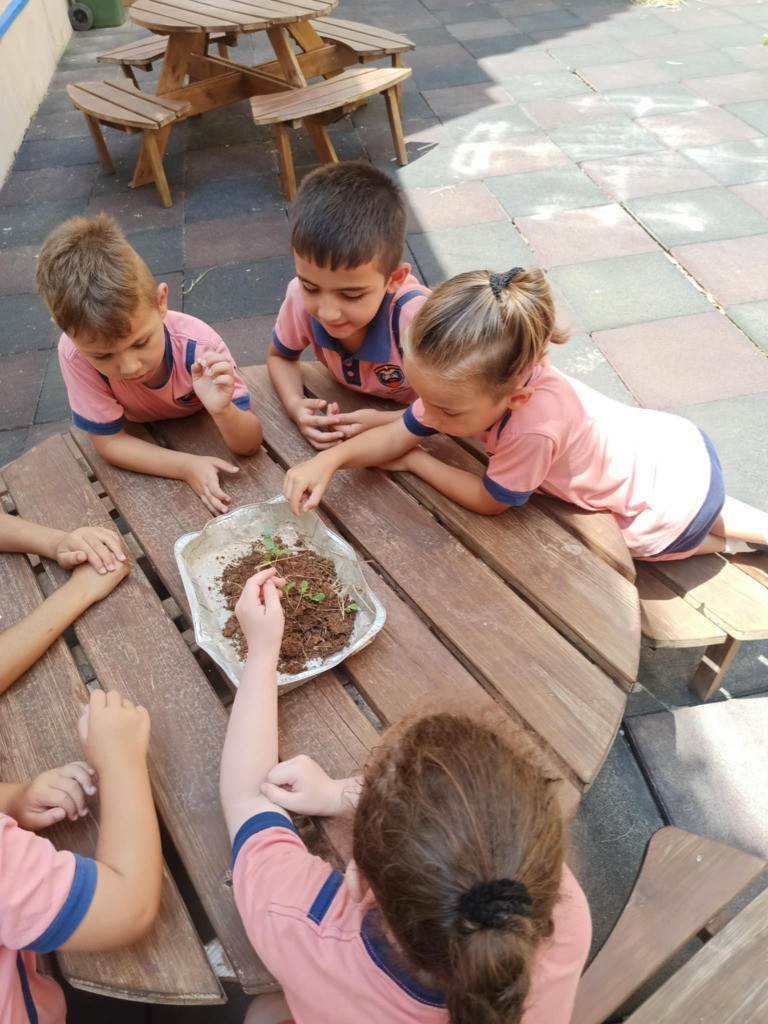
Soil's Magic 2
1. Watching the magic unfold
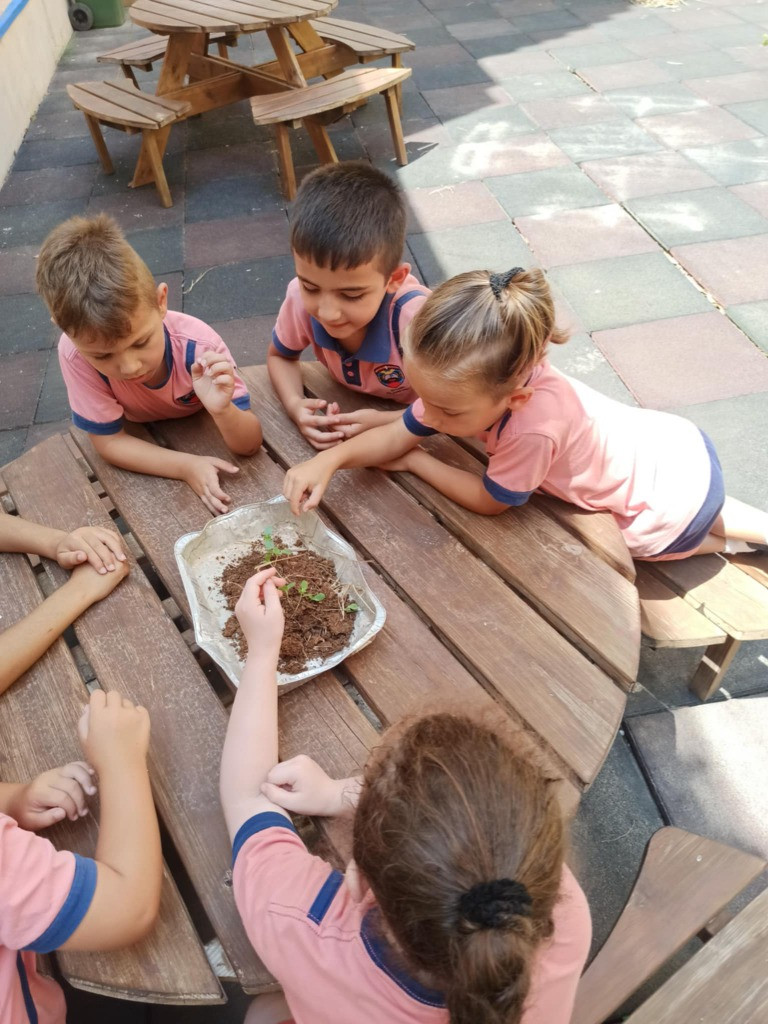
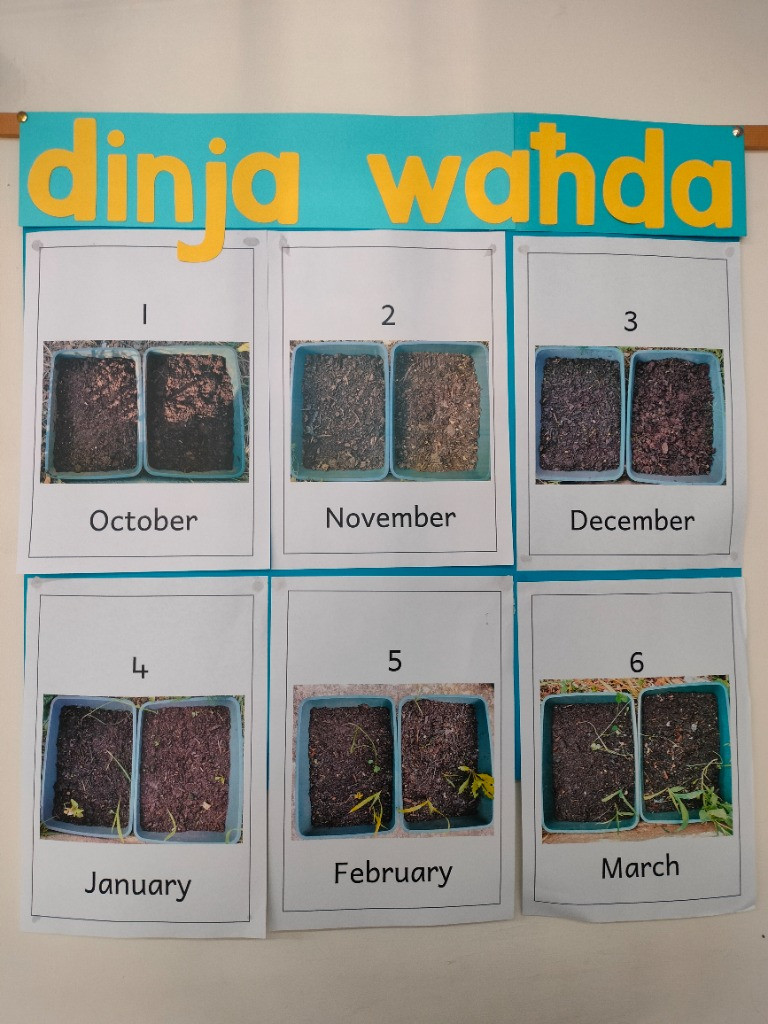
Over the first and second terms, your wild plants will keep changing, growing, flowering, seeding, and eventually withering. Take the children regularly to the Soil Magic spot to witness these changes. Always nurture that sense of wonder at how life appeared from what seemed like “just soil.”
2. From wonder to science skills
Once the children grasp how special soil is, begin introducing simple science skills:
- Theorising – thinking and sharing ideas.
- Observing – looking closely at details.
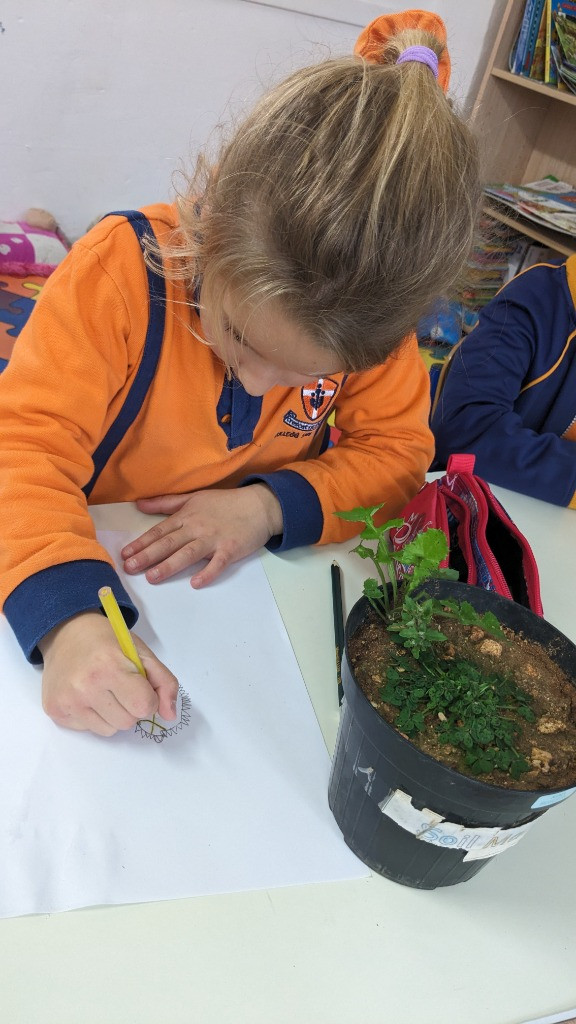
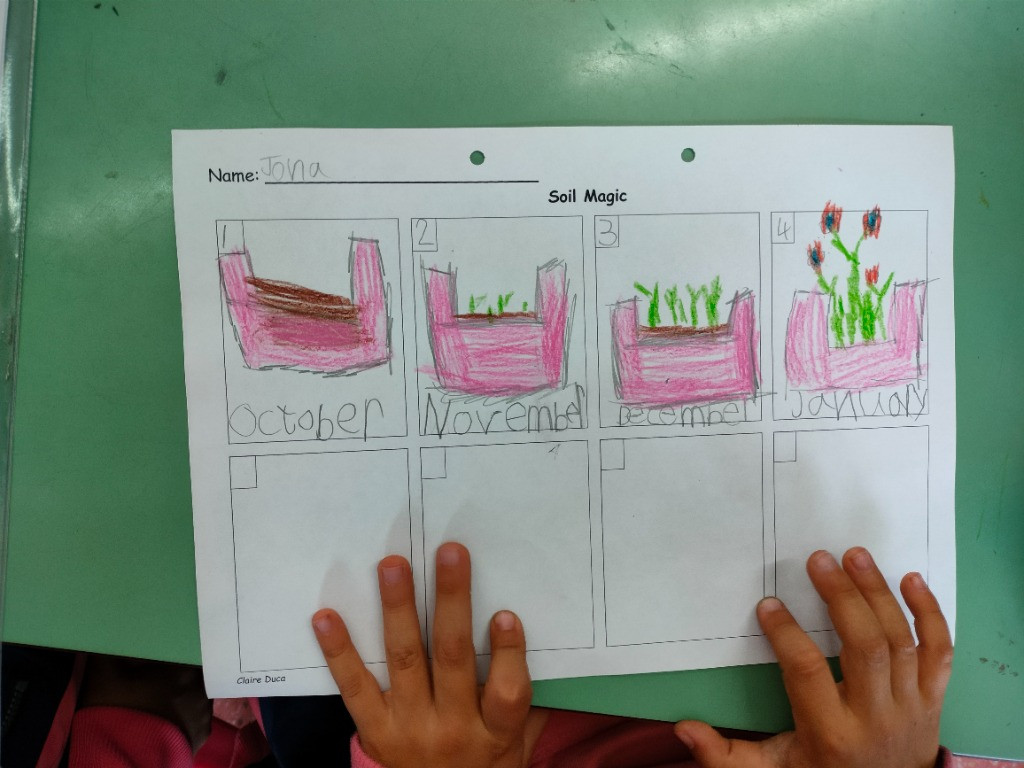
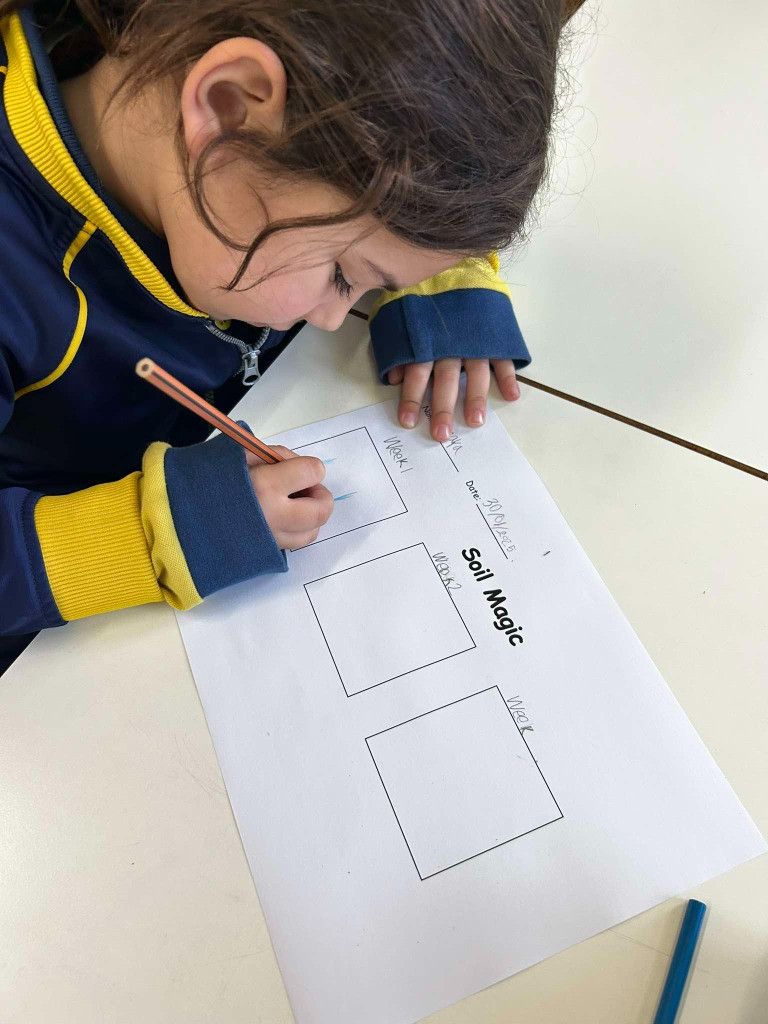
- Recording – drawing or writing what they notice.
Ask:
“How do you think the plants grew?”
Guide them toward the idea that the soil held “sleeping” seeds, and that conditions like rain and sunlight “woke them up.” Connect this with weather and seasonal changes, helping children see how people, plants, and nature are all connected.
3. Observing and recording growth
Encourage children to capture the story of their wild plants in creative ways:
- Create Symbols/Drawings: Children design a simple symbol for wild plants, draw or cut them out, and add them to a big “Soil Magic” chart or diary.
- Focus on Shapes: Look closely at the leaves. Children can recreate them using simple shapes (triangles, circles, squares) and match these to the plants they observe.
- Weather Tracking: Make a weather frieze (a visual timeline) for the week. Children stick on sun, rain, wind, or cloud symbols each day. Take weekly photos of the Soil Magic boxes and add them to the timeline.
- Miniature Model: Build a small classroom version of the wild plants using a container for “soil” and matchsticks or small objects to represent the plants. Each colour/object can stand for a different plant.
Resources & Equipment Needed
- Soil and boxes from “Soil Magic”;
- Large card for Soil Magic chart;
- Shape templates (square, triangle, circle, etc.);
- Coloured pens/pencils;
- Scissors;
- Glue, Blu-Tack.
You can download these instructions in PDF by clicking here: Generate PDF
Downloadable Material
Activity Sheet_Soil's magic 2
PDF Document
Make sure to take photos of:
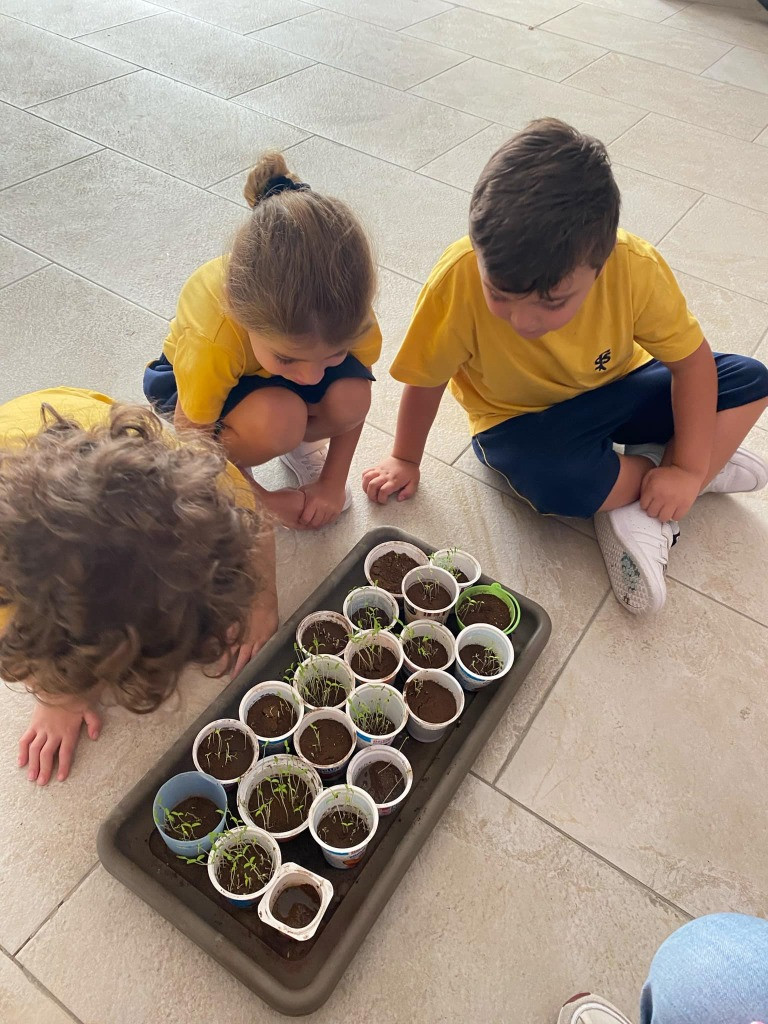
1. Children counting and observing the plants2. The different ways children keep their records
Activity Photos for Inspiration
Learning Outcomes & Curriculum Integration
Subjects
- - Maths, Science, English, Maltese
Learning Outcomes
Subject: English
Learning Outcomes:
· Give an appropriate response (verbal and non-verbal) while listening and viewing.
· Respond to questions.
· Frame and ask questions for clarification, elaboration and understanding.
· Discuss collaboratively to achieve the objective of a task. Generate and explore different ideas / points of view.
· Sequence details and events.
Subject: Maths
Learning Outcomes:
· Saying the value of each number from 1 to 10,
· Measuring length using uniform non-standard units.
· Using language such as long/short and longer/ shorter… to compare two quantities.
· Ordering familiar events in time using a timeline.
· Saying the days of the week [in order]
· Recognising the square, the rectangle, the triangle and the circle in different orientations.
· Talking about, recognising and recreating patterns.
· Identifying symmetrical objects in the environment
· Discussing and explaining results.
Subject: Science
Learning Outcomes:
· Explore and observe a variety of living things.
· Explore different types of seeds, leaves and plants including flowering and non-flowering plants.
· Identify various weather conditions experienced in Malta and relate these to their everyday life experiences.
· Handle scissors safely to cut freely, along straight and curved lines.
· Explore and use everyday materials as construction resources. Such materials may include building blocks, lollipop sticks, cards, cups, bottle caps, pasta, pipe cleaners etc.
Subject: Maltese
Learning Outcome/ Strateġiji u attitudnijiet u mġiba :
· Jifhmu li l-interazzjoni soċjali tiġi mill-istruzzjonijiet/mid-direzzjonijet fil-klassi billi jagħtu tweġibiet verbali jew mhux verbali.
· Jitkellmu b’sentenzi sempliċi dwar sekwenzi fi stampi.
· Iwieġbu għal mistoqsijiet diretti fil-kuntest tal-ħajja ta’ kuljum.
Integration with Curriculum
|
Activity |
Topic |
Proposed Time |
Resources |
|
Nature’s Magic 2 |
Garden
Plants: life cycle, different parts, different leaf shape & texture
|
Term 1 & Term 2 - weekly observation
|
Depends how you’re going to record the observations, you might need: · One large piece of card for soil chart · Templates to draw around (square, triangle, circle etc.) · Matchsticks · Coloured pens/pencils · Scissors · Glue, Blu-tack |