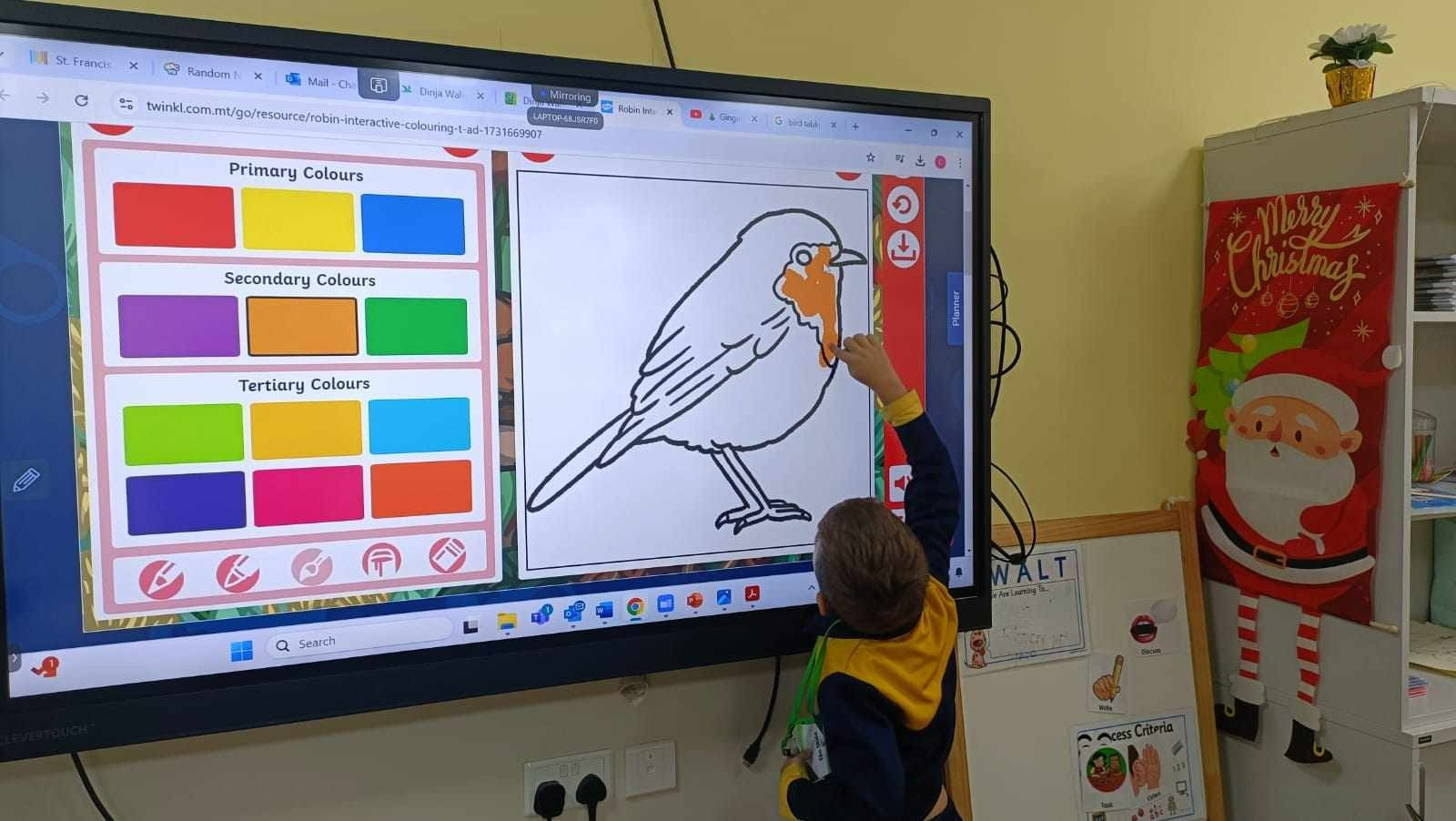
Robin Watch 1
1. Storytime with Happy Song
Begin by reading the story "Happy Song / L-Għanja li Tferraħ" (Downloadable Materials) in whichever way best fits your lesson. You may choose to use the "Story cards" from the Downloadable Materials to help bring the tale to life. The robin song recording is also available there, perfect to animate the story and spark the children’s imagination.
About Robins
Robins (Maltese pitirross) are easy to recognise. Their bright orange breast (not red!) stands out boldly, and they don’t even try to hide it. Both males and females look the same.
Robins rely on their colour, their calls, and their song to warn other robins to stay away. They are highly territorial and do not tolerate another robin in their patch. A robin’s territory could be a part of a garden, a corner of a field, or even your school’s Wildlife Garden.
Unlike many birds, robins are solitary. You’ll never see a flock of them! The only time a male and female share space is during the nesting season, when they raise a family. Afterward, they go their separate ways. Some birds mate for life, but robins prefer independence.
Robins are quite common in Malta, but they are not here all year round. They migrate from Europe in autumn, escaping the cold northern winters. Arriving around October (not Christmas, as many believe!), their familiar tik-tik-tik and thin whistles fill our gardens and fields. Some stop only for a few days to rest before continuing to North Africa, while others remain for the winter, staying up to six months. By March, they leave again, heading north to nest, and their songs vanish from our countryside.
Although robins may linger in shady spots like Buskett during summer, they have never been known to nest in Malta.
Robins mostly eat insects and worms, though they won’t resist a bird table with birdseed.
Importantly, robins are protected by law. Years ago, trapping them was common in Malta, especially with boys and men using trabokki (illegal traps). Thankfully, this practice has greatly declined. Robins, however, cannot survive in captivity, refusing food until they die, so they must always be left in the wild where they belong.
Resources & Equipment Needed
- Story cards
You can download these instructions in PDF by clicking here: Generate PDF
Downloadable Material
Make sure to take photos of:
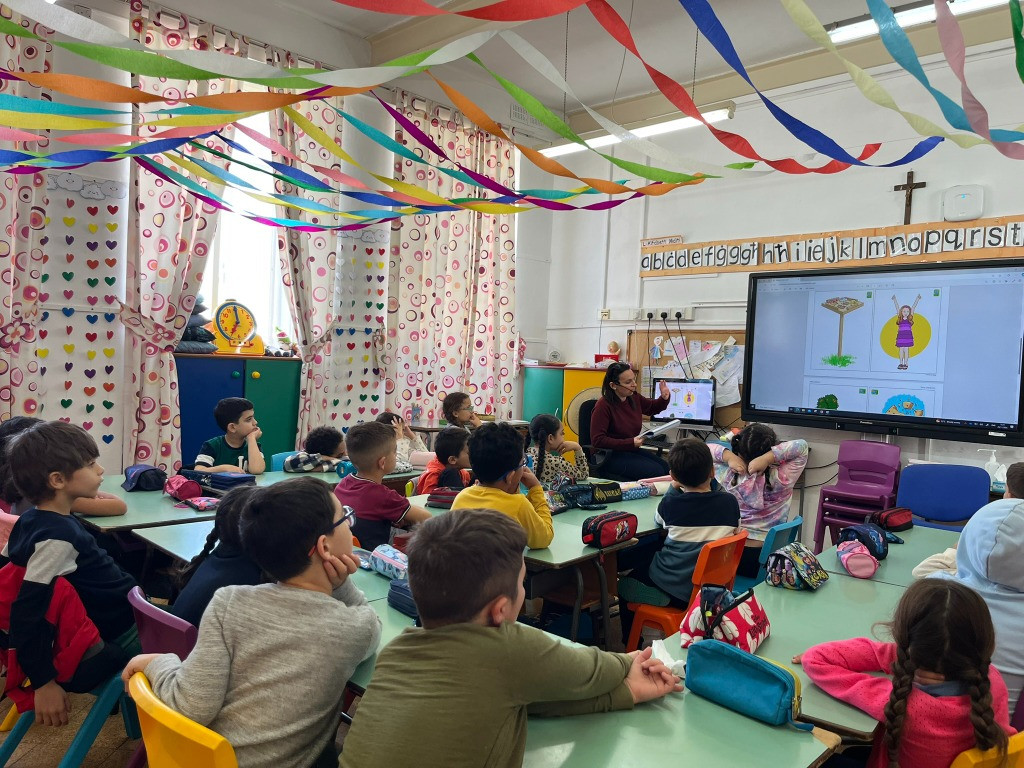
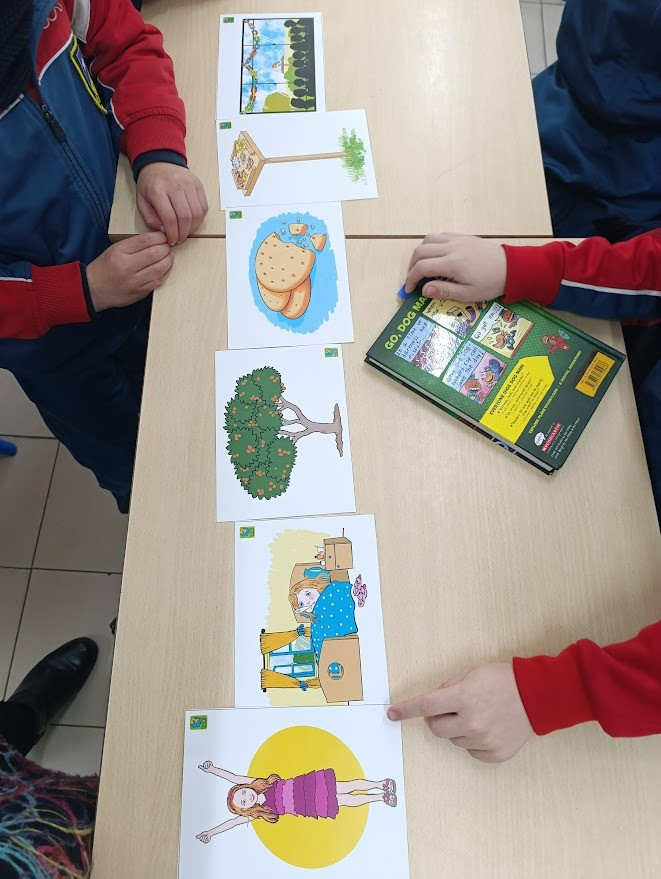
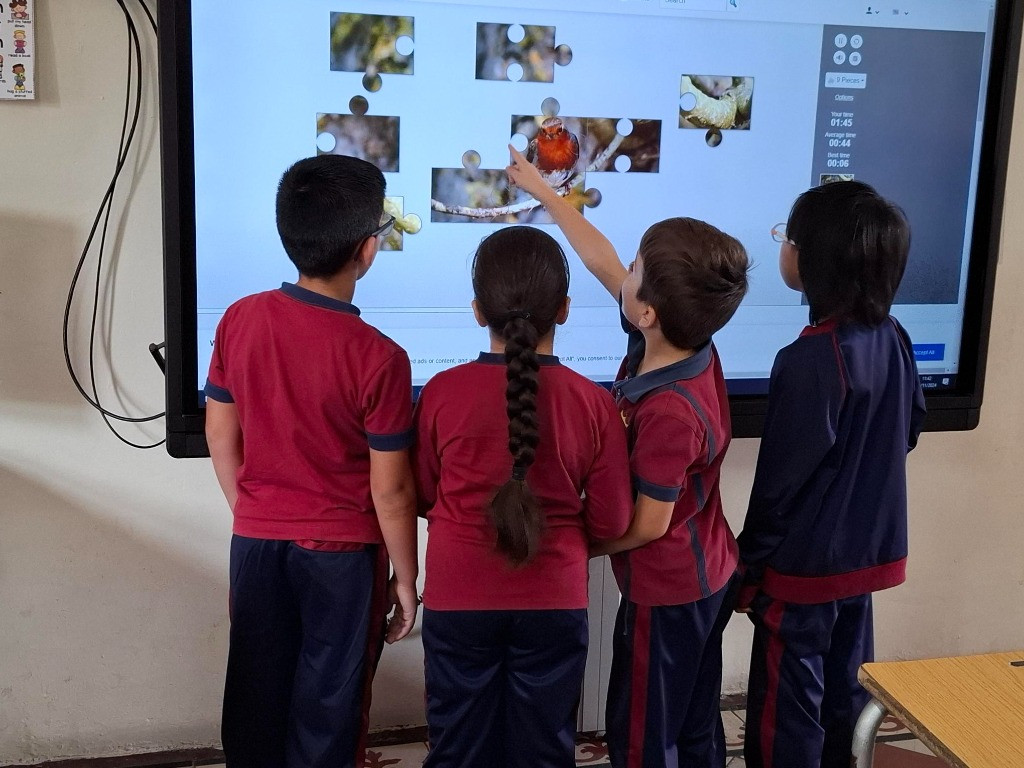
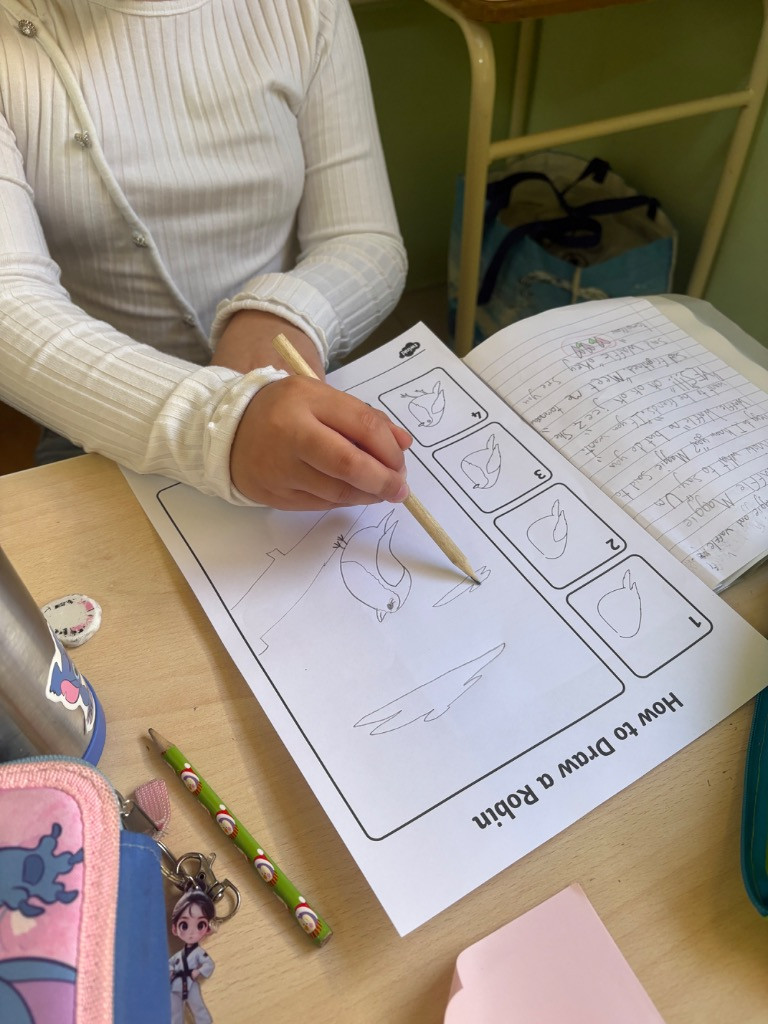
1. Children listening to the story and any lesson activity around the story.Activity Photos for Inspiration
Learning Outcomes & Curriculum Integration
Subjects
- - Science
- - English
- - Maltese
Learning Outcomes
Science
3.1.1 I can ask questions about the world around me.
3.7.4 I can talk about various weather conditions experienced in Malta throughout the year.
3.7.5 I am able to distinguish between the four seasons with regards to weather conditions.
English
R 5.2 I can read silently on my own and demonstrate understanding.
LIT 5.2 I can read and understand literary texts, including poetry, prose and drama, and listen to literary texts being performed or read aloud.
LIT 5.3 I can respond to simple poems, stories and plays by speaking and writing briefly about how I feel about the literary texts and about the events and characters in these texts.
Integration with Curriculum
Instructions for students:
1. Fill in a story review where they show understanding of the story. This can be used as an assessment.
2. Match the storyboard pictures from the Resource File to the sentence cards you create and hang them in class in order as the events happen in the story.
3. Draw pictures of the robin to hang on a display in class. They can also look up information about the robin to add to their display, including what it likes to eat.