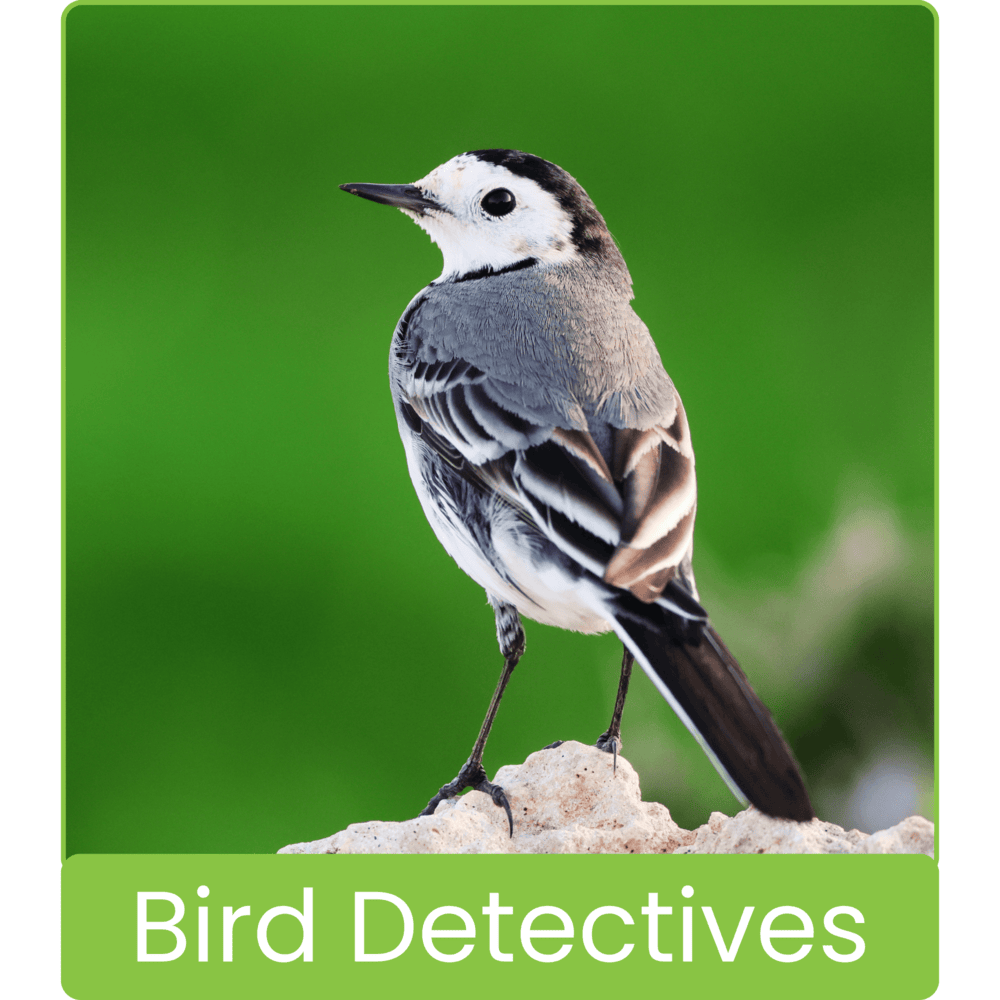
Bird Detectives: Observe, Investigate, Share
The Birdwatchers badge invites students to explore Malta’s rich biodiversity by learning about its bird species. Using short videos and outdoor exploration, they’ll discover how to identify different birds, recognize their behaviours, and record their observations. This process encourages a scientific and curious approach to understanding the natural world, fostering both knowledge and appreciation for Malta’s wildlife.
Badge goals
By the end of this activity, students will:
- Observe wildlife systematically
- Record and compare observations
- Identify patterns and ask questions
- Use observations as evidence when considering possible explanations
- Communicate their findings to others
When & Where to use this badge
This activity can be linked with Science (observation, evidence and investigation), Environmental Studies (local biodiversity), Mathematics (counting and representing observations), Languages (writing and presenting findings), ICT / Media (digital communication), but can be adapted by teachers across disciplines who wish to explore creative approaches to nature-based learning.
Teachers can adapt location and level of detail depending on their school context, while keeping the core flow: Learn → Explore → Record → Analyse → Share
Additional tip: Students can join the activity at different break-club sessions, so each observation session should work on its own while contributing to a shared school record.
Steps to complete this badge
Step 1 – Look & Think (10 minutes)
Using the “Bird Videos” in the Downloadable Materials, introduce students to some common birds they may encounter around the school. Explain that break time is a busy period, so students will mainly use visual observation rather than relying on bird calls, but they should listen for calls at other times of the day.
Discuss how to observe wildlife without disturbing it: watch from a distance and do not chase or approach birds.
Ask:
- What can we actually see?
- What do we think might be happening?
- What questions could we investigate?
Step 2 – Observe (15–20 minutes)
Choose one or more suitable observation points around the school, such as a courtyard, garden, sports area, tree, classroom window or other vantage point. Consider use different locations during different break-club sessions.
Students observe birds without approaching or disturbing them.
Students record:
- What species they see
- Number of birds
- Where they are
- What they are doing
- Date and time
- Weather conditions
Step 3 – Investigate
Repeat observations during different break-club sessions and, where possible, from different locations or under different weather conditions.
Students compare their records and look for patterns.
Ask:
- Are some birds seen more often than others?
- Which areas of the school seem most attractive to birds?
- Do birds behave differently in different areas?
- Does the weather appear to make a difference?
- What might explain what we have observed?
- What can our observations tell us – and what can’t they tell us?
Step 4 – Tell the Story
Students use their observations to create a simple piece of communication about what they discovered.
They could:
- Create a “Birds of Our School” display
- Make an infographic
- Write a short article for the school newsletter
- Produce a short video or podcast
- Present their findings at assembly
- Create a “Did you know?” awareness message
Students should include what they observed, what they discovered, and maybe questions they still have.
You can download these instructions in PDF by clicking here: Generate PDF
Resources & Equipment Needed
- Paper / notebooks
- Recording worksheet
- Pens/pencils
- Bird videos (provided list)
- Optional: binoculars
Downloadable Material
Bird Videos
YouTube Video